Roast-Vegetable Bread Dumplings with Onion Gravy
Make the Most of What Is Left
12 bread dumplings with onion gravy; 3 dumplings and one-quarter of the gravy per serving · Active 30 min · Total 1 hr 5 min
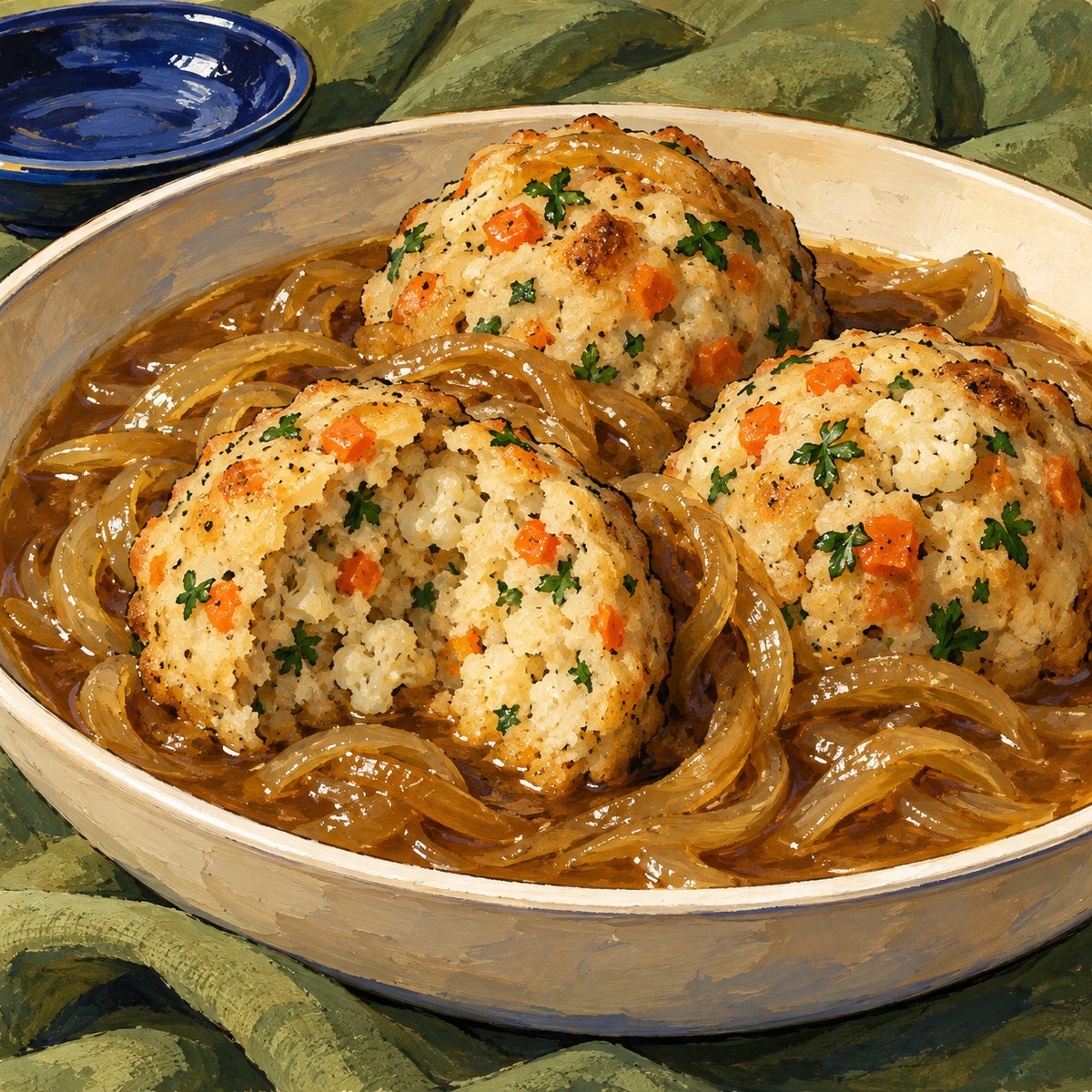
Firm bread ends and a small amount of cooked roast vegetables become soft, substantial dumplings in a pool of onion gravy. The vegetables stay in little pieces rather than being blended away. A short soak brings the bread together, while gentle poaching keeps the outside tender. Three dumplings and a generous spooning of gravy make each of the four portions.
Dry bread earns its place here
Choose a plain loaf with a reasonably firm crumb. Bread that has become dry is useful because it takes up the measured milk without collapsing immediately; bread with mould or an off smell must be discarded. Cut away only a genuinely hard, thick crust, then chop that crust finely rather than throwing it away. The soaked mixture should squeeze together in your hand. If it is dripping, it needs a little more standing time before you shape anything. Pressing the dumplings gently is enough; packing them rock-hard creates a heavy center.
Keep the vegetable pieces small
This recipe names cooked carrot and cauliflower so the moisture level and finished appearance are understandable. Chop both quite finely and blot away surface oil or liquid before mixing. Large chunks interrupt the bread structure and make a dumpling split as it cooks. The vegetables should have been cooled promptly after their first cooking and refrigerated. A fresh roast-vegetable batch is also possible, but roasting and cooling it come before this recipe begins. The 65-minute total starts with those vegetables already cooked.
Poaching and gravy can share the clock
The onions need time to soften and brown before flour and stock go into the gravy. Start them while the bread soaks, then keep the finished gravy on a low heat while the dumplings cook. The poaching water should tremble gently, with small bubbles at the edges. A rolling boil knocks pieces off the dumplings and clouds the water. Cook in two batches if your pan is narrow. Lift each dumpling with a slotted spoon, allow water to drain and place it straight into a warm shallow bowl.
Ingredients
- About 6 loosely packed cups cubed plain stale bread (300 g)
- 3/4 cup milk (180 ml)
- 2 large eggs (100 g without shells), beaten
- 3/4 cup cooked roast carrots (125 g), finely chopped
- 1 cup cooked roast cauliflower (125 g), finely chopped
- 1/4 cup all-purpose flour (30 g)
- 2 tablespoons finely chopped parsley (8 g)
- 1/2 teaspoon fine salt (3 g), divided
- 1/4 teaspoon black pepper (0.5 g)
- 1 1/2 tablespoons neutral oil (22 ml)
- 2 medium onions (300 g), thinly sliced
- 2 tablespoons all-purpose flour (16 g), for the gravy
- 2 cups vegetable stock (480 ml)
Set out
Large mixing bowl, Large wide saucepan with lid, Medium saucepan, Slotted spoon, Food thermometer, Knife and chopping board
Allergens
Egg, Milk, Wheat. Check labels and substitutions.
Make it
- Put the bread in the mixing bowl. Pour over milk, turn well and stand for 10 minutes. Meanwhile start the gravy: heat oil in the medium saucepan over medium heat and cook onions for 15–18 minutes, stirring, until softened and golden.
- Mix the eggs, chopped cooked vegetables, 30 g flour, parsley, half the salt and pepper into the soaked bread. Stand for another 5 minutes. Press into 12 compact balls about 2 inches/5 cm across with damp hands.
- Stir the gravy flour into the browned onions for 1 minute. Gradually add the stock and remaining salt, stirring out lumps. Simmer for 8–10 minutes until lightly thickened. Keep hot on a low heat, stirring occasionally.
- Bring a wide pan of water to a gentle simmer. Lower in the dumplings, in two batches if necessary. Cover with the lid slightly ajar and poach at a quiet simmer for 20–25 minutes. The dumplings should feel set and the center of a test dumpling must reach 165°F/74°C.
- Lift with a slotted spoon and drain briefly. Serve three dumplings per bowl with one-quarter of the hot onion gravy.
Choose a useful vegetable portion
A few leftover pieces are more useful chopped into this dough than left as an unplanned garnish. Weigh the two vegetables after cooking and trimming, so you know whether you have enough for the batch.
Ingredient labels
Check bread and stock labels; stock can contain celery, wheat or soy.
A useful detail
Use bread that is dry but sound. A plain white or mixed-grain loaf works; very soft sandwich bread may need 5 extra minutes to absorb the milk before shaping. The recipe begins with cooked roast vegetables; their first cooking is outside the stated total. The 65-minute total assumes one roomy poaching batch; add 20–25 minutes if your pan requires two batches.
Another way
- Replace the cooked cauliflower with the same weight of cooked roast parsnip, chopped small; the dumplings will be a little sweeter.
- Use chicken stock instead of vegetable stock if that is what is already open, provided it is within its storage window.
Keep it well
Start with vegetables that were refrigerated promptly and are no more than 2 days old. If not eating all the dumplings, cool them and the gravy promptly in separate shallow containers within 2 hours, or 1 hour above 90°F/32°C. Keep at 40°F/4°C or below and use within the original vegetables’ 3-day window, never more than 1 further day. Reheat once to 165°F/74°C; making dumplings does not restart the storage clock.


Comments
Post a Comment